v2.0.0  ·  macOS · Windows · Linux

AWS port
forwarding,
without friction.

Save SSM connections once, launch them in one click. No open ports, no SSH keys, no bastion hosts — just IAM, with a UI that doesn't slow you down.

Open source · MIT No telemetry No account required
SSM Session Terminal
Prod OpenSearch ×
Staging MQ ×
Aurora Prod ×
$ aws ssm start-session --target i-0abc...
Connected · Port 5601 → 443
Port 5601 forwarding to remote host.
Waiting for connections...
 
Session: aws-0abc1def2345
 
_
OpenSearch :5601
Aurora :5432
MQ :15672
5 max
simultaneous sessions
1 click
to reconnect saved tunnels
0
open inbound ports needed
4+ services
OpenSearch · Aurora · Redis · MQ
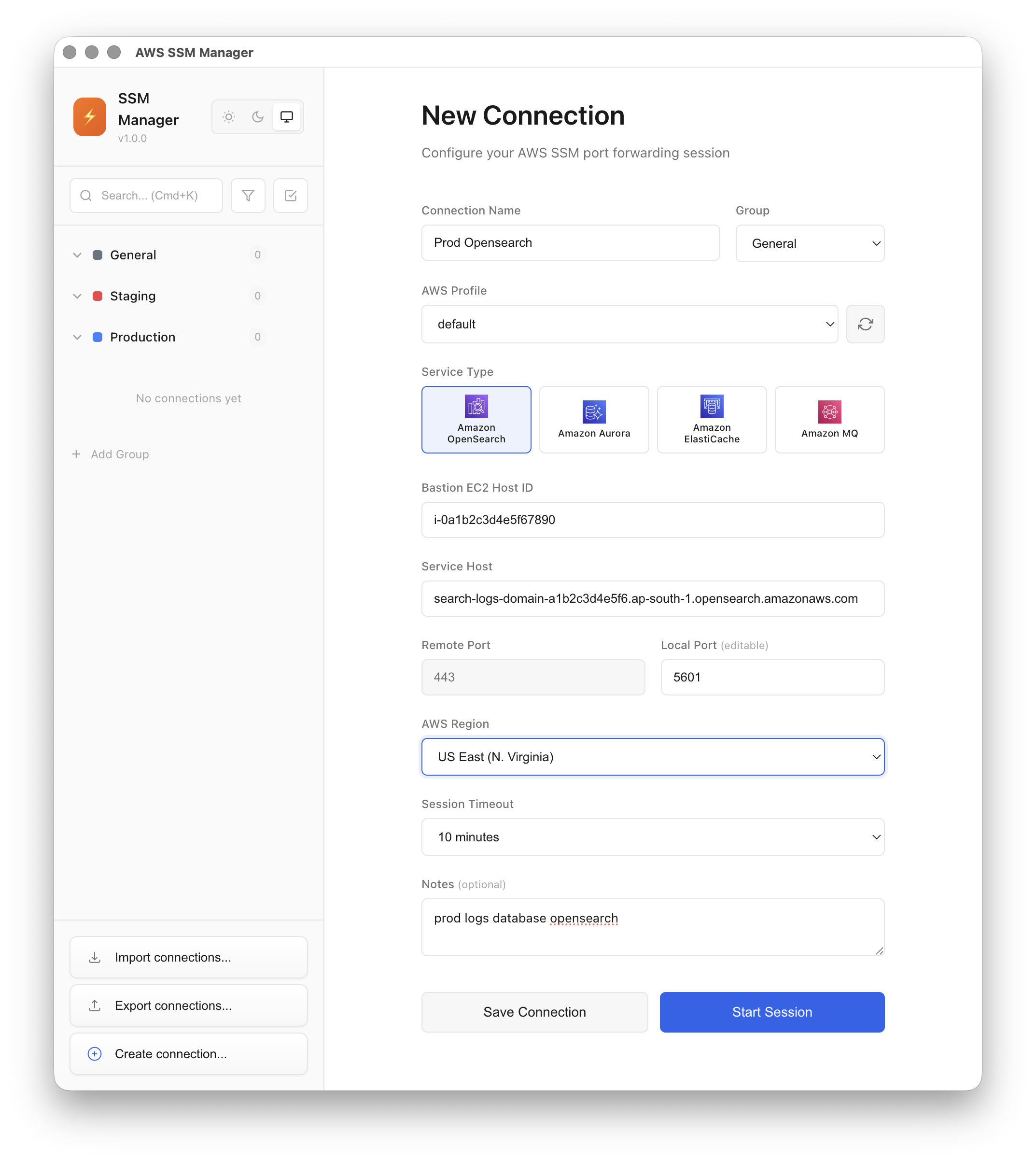
AWS SSM Manager — application screenshot

Built for daily use

Every feature exists because the CLI workflow was painful in a specific, repeatable way.

Multiple simultaneous sessions

Run up to 5 tunnels in parallel. Each session gets its own tab in the terminal modal — switch between them instantly. Independent status indicators in the sidebar.

One-click launch

Save connections with name, instance ID, service, region, and profile — then launch in a single click. No more hunting for IDs or scrolling through history.

Secure by design

No inbound ports. No SSH keys. No bastion hosts. Built entirely on AWS SSM — the same IAM-based security you already rely on.

Port conflict detection

Catches a busy local port before the tunnel starts — a clear warning instead of a cryptic failure or a silent hang that wastes five minutes of debugging.

Organized & filterable

Group connections by environment, filter by region, service, or profile. Drag to reorder. Bulk move, export, or delete. Keyboard-first navigation throughout.

Onboarding checks

First-run validation verifies your AWS CLI, Session Manager plugin, and credentials — before you waste time debugging a setup issue you didn't know existed.

Supports Amazon OpenSearch Aurora PostgreSQL ElastiCache Redis Amazon MQ Custom Services

Three steps to connect

From download to running tunnel in under two minutes.

01
Pick your profile

AWS SSM Manager auto-detects your AWS CLI profiles from ~/.aws/. Select one from the dropdown — no manual configuration.

02
Configure & save

Enter your EC2 instance ID and target endpoint. Ports are pre-filled per service type. Save it — you'll never type this again.

03
Start Session

Click Start Session. Your service is now reachable on localhost. View live tunnel output in the terminal panel and copy the service URL in one click.

Before you get started

Install these once — the app checks them automatically on first run.

AWS CLI v2
brew install awscli Installation guide →
Session Manager Plugin
brew install --cask session-manager-plugin Installation guide →
AWS Credentials
aws configure --profile my-profile

Supports IAM users, roles, and SSO.

IAM Permissions
ssm:StartSession · ssm:TerminateSession

Plus ec2:DescribeInstances for instance lookup.

EC2 instance requirements
  • SSM Agent installed and running (pre-installed on Amazon Linux 2, Ubuntu 20.04+)
  • IAM instance profile with AmazonSSMManagedInstanceCore policy
  • Outbound internet access or VPC endpoints for SSM

Get AWS SSM Manager

Free and open source. No account required.

Latest release
Open source · MIT No telemetry No outbound calls SHA-256 checksums
macOS showing "Damaged and can't be opened"?

This is a Gatekeeper quarantine flag macOS adds to browser downloads — not actual damage. Run this once in Terminal:

xattr -cr "/Applications/AWS SSM Manager.app"

Removes the quarantine flag for this app only — doesn't affect system-wide Gatekeeper settings.

Stop copy-pasting
instance IDs.

Free, open source, and ready in under a minute.